Flotilla, bareboat or skippered? Compare the types of sailing holiday, costs and experience needed, and find out what a week afloat is like for beginners.
You have seen the photos: a yacht anchored in a turquoise bay, friends diving off the back, dinner in a harbour taverna as the sun goes down. Then you start researching, and the jargon arrives. Flotilla, bareboat, skippered, crewed, cabin charter, Day Skipper, ICC. Which one is right for you, especially if you have never sailed before?
This guide compares the main types of sailing holiday side by side, with a particular focus on the question UK searchers ask most: can I go on a sailing holiday with no experience? (Short answer: yes, absolutely.)
The four main types of sailing holiday
1. Bareboat charter
You rent the boat on its own and sail it yourself. Someone in your group needs to be a qualified, confident skipper. For most charter companies in the Mediterranean, that means an RYA Day Skipper (or equivalent), often with an International Certificate of Competence (ICC), plus a VHF radio licence. Bareboat gives you complete freedom and is usually the cheapest option on paper. But the skipper in your group carries all the responsibility, and they will not get much of a holiday.
2. Flotilla
A flotilla is a group of yachts, typically somewhere between six and a dozen boats, sailing a set route together with a lead boat. The lead crew usually includes a skipper, a hostess and an engineer. Each yacht is sailed by its own crew, so on a classic flotilla someone on each boat still needs some sailing experience. The lead crew gives a daily briefing, recommends where to stop, and helps with mooring and any technical problems. Flotillas are sociable, with evening meet-ups and group dinners, and they are popular in Greece, Croatia and Turkey.
Some operators now offer “skippered flotillas” or cabin-based flotillas, where a skipper sails your boat within the flotilla. These are a halfway house: you get the social group, but the price rises to cover the skipper.
3. Skippered charter
A professional skipper sails the boat for you. You can join in as much or as little as you like. The skipper handles navigation, weather, mooring and anchoring, and acts as a local guide too, recommending bays, beaches and restaurants. This is how Poseidon Week works. Every week includes a licensed skipper, and no sailing experience is needed.
4. Fully crewed charter
The luxury end of the market: a larger yacht with a skipper plus a crew, usually including a chef and a host or stewardess. Meals, cleaning and service are taken care of. You can get close to this experience on Poseidon Week by adding a chef or host on board as an extra.
| Bareboat | Flotilla | Skippered | Fully crewed | |
|---|---|---|---|---|
| Experience needed | Qualified skipper | Usually yes, per boat | None | None |
| Who sails? | You | You, with lead-boat support | Your skipper (you can help) | Crew |
| Route flexibility | Total | Set route | Flexible, with local knowledge | Flexible |
| Privacy | High | Medium, sociable | High (whole boat) or shared (cabin) | High |
| Relative cost | £ | ££ | ££ | ££££ |
| Best for | Experienced sailors | Sailors who want company | Beginners, groups, families | Luxury, special occasions |
Flotilla vs skippered: the honest comparison
These are the two options most UK holidaymakers weigh up, so let’s look at them in more detail.
Experience and confidence
This is the deal-breaker. On a classic flotilla you are in charge of your boat once you leave the dock. The lead crew is there for support, but they are not on board with you when you pick up a mooring in a crosswind or when the afternoon breeze builds. If nobody in your group has sailed before, a skippered week is the more relaxed choice. If you have done a course or two and want to build experience, a flotilla is a great next step.
Social life
Flotillas are built around socialising. You meet the same crews at every stop, and many people make lasting friends. Skippered boats are more private, which suits groups of friends, families and couples. If you are travelling solo or as a couple and want to meet people, our shared-boat cabin weeks give you a similar social feel. You share a yacht with other guests and a skipper, without having to sail it yourself.
Freedom of route
A flotilla follows a pre-planned itinerary, and boats generally meet at the same harbour each night. A skippered boat can change plans on a whim. Want to stay another night in a bay you love, or chase a festival on a particular island? Your skipper can make it happen, wind and weather allowing.
Responsibility and stress
On a skippered week, a professional takes care of the boat, the forecast, the paperwork and the security deposit inspection. On a flotilla or bareboat, all of that is yours. Many groups only realise how much mental load the “group skipper” carries once they try a skippered week.
Cost
A flotilla cabin price can look cheaper, but compare like with like. Bareboat flotilla prices usually do not include a skipper, and extras such as fuel, marina fees, cleaning and damage waivers can add up. Industry guides put a hired skipper at roughly €150–250 per day if you add one to a bareboat. With Poseidon Week the skipper is already in the price: from £1,030 per person per week for a cabin, or from £6,790 for a whole boat. Food, drinks, fuel and marina fees come out of a shared kitty, usually €150–250 per person per week.
Never sailed before? Mallorca & Menorca is bookable now, with a skipper included from £1,430 per person.
See the Mallorca & Menorca weekA sailing holiday with no experience: what it is really like
If you have never set foot on a yacht, here is what a typical skippered week looks like from the inside.
- Day 1 · Boarding from 17:00Meet your skipper, choose cabins, get a safety briefing and learn where everything is. Dinner in port.
- Day 2 · First sailA short passage of a couple of hours to a sheltered bay. Your skipper shows anyone interested how to steer and handle the lines.
- Days 3–5 · Island-hoppingTypically 2–4 hours of sailing a day, with swimming, snorkelling and long lunches at anchor. Evenings in harbour towns or at anchor under the stars.
- Day 6 · Last full dayOften the best day: a favourite bay, a final dinner, maybe a beach club.
- Day 7 · Disembark by 10:00Back to the base marina, breakfast, and goodbyes.
Will I get seasick?
Most people do not, especially in summer in sheltered sailing areas. Skippers plan routes around the forecast and generally avoid long open-water legs in rough conditions. If you are prone to motion sickness, consider a catamaran, which heels far less than a monohull. Bring your usual remedy and stay on deck looking at the horizon. Below deck, and especially reading, is where queasiness starts.
Do I have to help?
No. Some guests love to learn the ropes, literally, and by midweek they are helming and trimming sails. Others treat the boat as a floating villa. Your skipper is happy either way. If you want to learn properly, ask about adding a sailing course as an extra.
Where do we sleep and wash?
On modern yachts and catamarans, cabins are compact doubles, usually with their own or shared heads (toilet) and shower. Fresh water is limited, so expect quick showers on board and long swims in the sea. In marinas you also have access to shore showers.
What about food?
You decide. Most groups mix breakfasts and lunches on board with dinners ashore. Shopping is paid from the kitty. If nobody fancies cooking, add a chef or host on board, or have provisioning delivered before you arrive.
Pack a soft bag rather than a hard suitcase. Storage on board is tight, and soft bags fold away into lockers. Add a light windproof layer, too: even on a hot day it can feel chilly on deck when the breeze picks up.
What your skipper does (and doesn’t do)
New sailors are often unsure what to expect from the skipper, so here is how it works on our weeks.
Your skipper will…
- Plan each day’s route around the forecast, your group’s wishes and the best anchorages
- Sail, anchor and moor the boat, and handle the paperwork with marinas and port authorities
- Run the safety briefing, including lifejackets, the tender and what to do if someone falls overboard
- Teach anyone who wants to learn, from steering to tying knots
- Recommend restaurants, beaches, walks and the best spots to snorkel
Your skipper won’t…
- Act as a cook or cleaner. For that, add a chef or host on board.
- Sail into conditions they consider unsafe. The skipper’s word is final on safety, and that is exactly why you hired a professional.
- Cover your personal spending ashore, which is separate from the kitty
Think of your skipper as part captain, part local guide. The more you tell them about what your group enjoys, the better your week will be.
Safety on a sailing holiday
Safety is the number one concern of first-timers, and rightly so. On a skippered week, a licensed professional is responsible for the boat. Charter yachts carry lifejackets for everyone on board, along with a liferaft, flares, a first-aid kit and a VHF radio. Your skipper checks the weather several times a day and will choose sheltered routes and anchorages when the wind picks up.
For families, ask for children’s lifejackets in the right sizes when you book. Agree simple rules early on, such as lifejackets on in the tender and no swimming without telling the skipper. You will relax much more knowing everyone is on the same page.
Finally, buy proper travel insurance that covers sailing as a passenger. Travel and cancellation insurance can be added when you book with us.
Which is right for you?
Choose a flotilla if…
- At least one person per boat has sailing qualifications or solid experience
- You want to build your own skippering skills with a safety net
- You love the idea of a big, sociable group every evening
Choose a skippered week if…
- Nobody in your group has sailed before, or the one sailor wants a proper holiday
- You are travelling with children, and want someone else in charge of safety
- You want local knowledge of the best bays, restaurants and beaches
- You are celebrating something, whether a stag, hen, birthday or honeymoon, and want the day to revolve around your group
- You value flexibility over a fixed route
Where to try your first skippered week
For a first sailing holiday, look for sheltered waters, short hops and plenty to do ashore. These are our top picks for beginners:
- Greece: Ionian Islands: the classic beginners’ area, with green islands, calm mornings and short distances around Lefkada, Meganisi and Ithaca. Our Ionian weeks open in 2027.
- Mallorca & Menorca: bookable now, with easy flights from across the UK to Palma and a mix of national park islands and calas.
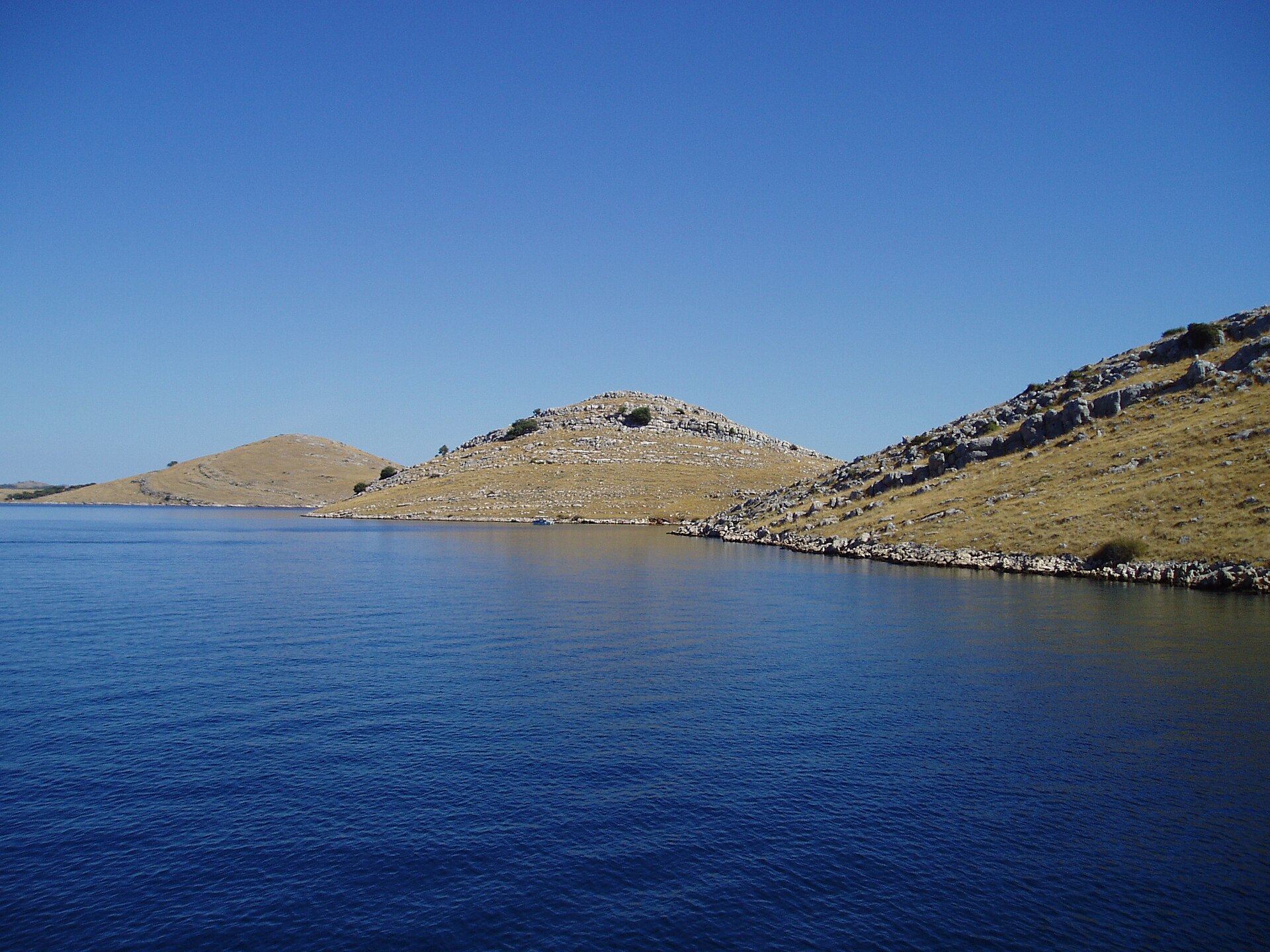
- Croatia: Kornati & Krka: protected waters, national parks and waterfalls; opening 2027.
- Canary Islands: our winter option, bookable now, with sea temperatures around 19–22 °C between November and April.
Questions to ask before you book any sailing holiday
Whichever format you choose, and whoever you book with, these questions will help you compare offers fairly:
- Is a skipper included, and are they licensed for that country’s waters?
- What is included in the price, and what is extra (fuel, marina fees, cleaning, bedding, the skipper’s food)?
- Is there a security deposit or damage waiver, and who is liable for it?
- What happens if the weather stops you sailing on a planned day?
- How flexible are dates, and what is the cancellation policy?
- Can you add extras such as transfers, a chef, water toys or a sailing course?
With Poseidon Week the skipper is always included. Running costs go through a transparent shared kitty, a €200 deposit holds your place, and you can change dates free of charge up to 90 days before departure.
Cabin or whole boat?
Once you have decided on a skippered week, there is one more choice. If you are a couple, solo, or a small group of friends, booking a cabin on a shared boat is the simplest option. You get the full skippered experience and the social side of a flotilla, without needing a crew of your own. If you are a group of six or more, a whole-boat charter usually works out cheaper per head and gives you total privacy. A full boat of 12 in the Ionian pays about £696 each for boat and skipper.
Not sure which week type fits? Browse our themed weeks, from Relax to Family and Celebration, and read how booking and payment work on our how it works page.
Start with the classic beginners’ sailing area. Pre-register for an Ionian week in 2027.
See the Ionian Islands weekFAQs
Can I go on a sailing holiday with no experience?
Yes. On a skippered week a licensed skipper sails the boat, so no experience is needed. You can learn to helm and handle lines if you want to, or simply relax.
What is the difference between a flotilla and a skippered charter?
On a classic flotilla you sail your own boat in a group with a lead crew for support, so someone on board usually needs sailing experience. On a skippered charter a professional sails your boat for you.
Is a flotilla cheaper than a skippered holiday?
Bareboat flotilla prices can look lower, but they usually exclude a skipper and extras. A hired skipper typically adds €150–250 a day; Poseidon Week includes the skipper from £1,030 per person.
Will I get seasick on a sailing holiday?
Most people don’t in sheltered summer waters, as skippers plan around the forecast. Catamarans heel less, which helps if you are prone to motion sickness.
Where is best for a first sailing holiday?
The Greek Ionian, Mallorca & Menorca and Croatia’s Kornati offer sheltered water and short hops in summer; the Canary Islands are a good winter option.